Tuesday, 9 April 2013

Do houses have loyalty?


In Out of Sheer Rage: Wrestling with D. H. Lawrence (1997), Geoff Dyer answers:
I also thought of knocking on the door of our old house, explaining that I was born there, that I lived there until I was eleven, and wanted to look around. I abandoned the idea as soon as I'd thought of it. Houses have no loyalty. We can live in a place ten years and within a fortnight of moving out it is as if we have never been there. It may still bear the scars of our occupancy, of our botched attempts at DIY, but it vacates itself of our memory as soon as the new people move their stuff in. We want houses to reciprocate our feelings of loss but, like the rectangle of unfaded paint where a favourite mirror once hung, they give us nothing to reflect upon. Often in films someone goes to a house where he once spent happier times and, slowly, the screen is filled with laughing. This convention works so powerfully precisely because, in life, it is not like that. It testifies to the strength of our longing: we want houses to be haunted. They never are.

-
—p. 87

Friday, 29 March 2013

Cha "Void" Poetry Contest


VOID

A Cha Poetry contest


This contest is run by Cha: An Asian Literary Journal. It is for unpublished poems on the theme of "Void".  

Judges:


  • Tammy Ho is a Hong Kong-born poet. She is a founding co-editor of Cha and an assistant editor of Fleeting Magazine
  • Daryl Yam is an aspiring writer of both prose and poetry, studying English Literature and Creative Writing at the University of Warwick. He is currently working on his first collection of short stories and poems. You can learn more about him and his previous work here
Rules:
  • Each poet can submit up to two poems (no more than 80 lines long each).
  • Poems must be previously unpublished. 
  • Entry is free.
Closing date:
  • 15 September 2013
Prizes:
  • First: £50, Second: £30, Third: £15, Highly Commended (up to 5): £10 each. (Payable through Paypal.)
  • All winning poems (including the highly recommended ones) will receive first publication in a special section in the Sixth Anniversary Issue of Cha, due out in November 2013. 
The prizes were generously donated by a reader from London, UK. 
Submission:
  • Submissions should be sent to t@asiancha.com with the subject line "Void".
  • Poems must be sent in the body of the email.
  • Please also include a short biography of no more than 30 words.
Previous Cha contests:


Saturday, 23 March 2013

CALL FOR SUBMISSIONS -- "THE ANCIENT ASIA ISSUE"


Cha: An Asian Literary Journal is now accepting submissions for “The Ancient Asia Issue,” an edition of the journal devoted exclusively to work from and about Asia before the mid-nineteenth century.

From the beginning of the twentieth century, ancient Asia has contributed to the rebirth and re-imaginations of modern literatures, not only in English (from Ezra Pound to Gary Snyder) but in other western languages as well (Victor Segalen, Octavio Paz, Bertolt Brecht…). “The Ancient Asia Issue” of Cha seeks to revivify this tradition, featuring translations and original works of poetry, fiction, creative non-fiction, and visual art from and about Ancient Asia, to be published in September 2013. If you have something interesting, opinionated, or fresh to say about the Asian past, we would like to hear from you. Please note that we can only accept submissions in English.

We are pleased to announce that Cha former contributor, translator and scholar Lucas Klein will be joining Cha as guest editor for the issue (see his biography below) and read the submissions with co-editors Tammy Ho and Jeff Zroback

The Reviews section will be devoted exclusively to books related to the theme of the issue. If you have a recent book that you think would be right for review in "The Ancient Asia Issue", we encourage you to contact our Reviews Editor Eddie Tay at eddie@asiancha.com. Books should be sent to Eddie before the end of May 2013.

If you would like to have work considered for "The Ancient Asia Issue", please submit by email to submissions@asiancha.com by 20th June, 2013. Please include "The Ancient Asia Issue" in the subject line of the email. Submissions to the issue should conform to our guidelines.

***

LUCAS KLEIN is a  former radio DJ and union organizer, is a writer, translator, and editor. His translations, poems, essays, and articles have appeared at Two Lines, Drunken Boat, Jacket, and PMLA, and he has regularly reviewed books for Rain Taxi and other venues. A graduate of Middlebury College (BA) and Yale University (PhD), he is Assistant Professor in the Department of Chinese, Translation & Linguistics at City University of Hong Kong. With Haun Saussy and Jonathan Stalling he edited The Chinese Written Character as a Medium for Poetry: A Critical Edition, by Ernest Fenollosa and Ezra Pound (Fordham University Press, 2008), and he co-translated a collection of Bei Dao 北島 poems with Clayton Eshleman, published as Endure (Black Widow Press, 2011). His translations of Xi Chuan 西川 appeared from New Directions in April 2012, as Notes on the Mosquito: Selected Poems (for more, see here), and he is also at work translating Tang dynasty poet Li Shangyin 李商隱 and seminal contemporary poet Mang Ke 芒克.
-

-

Monday, 18 March 2013

Geoff Dyer, John Berger and lamb chops

Geoff Dyer

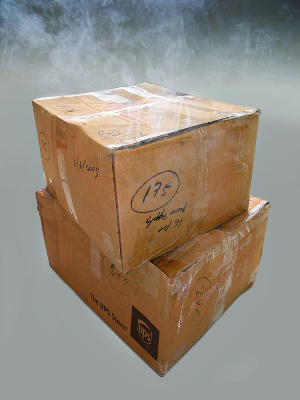
When Geoff Dyer was living in Paris, John Berger sent him a package containing four lamb chops, bloody and 'totally fresh', through the post. Dyer believed that's a token to both Berger's generosity and the marvellous efficiency of the French postal service.


.

Sunday, 17 March 2013

'Aren't we stifled enough already?': A conversation with students from the Hong Kong Institute of Education


What is your standard for a good piece of translation? 

THLM: There is always a pull between ‘the spirit’ and ‘the letter’ in translation, as Anthea Bell, translator of W.G. Sebald, says. If a piece reads well and does not deviate too much from the original, then I would consider it a good translation.
.
As an editor and founder of Cha, do you have some specific rules about what should be published and what shouldn't? In other words, do you think that every poet has the freedom to write on any issue or topic in their works? .
.
THLM: No specific rules. Rules kill originality and creativity. We publish good works, as simple as that. There are so many rules in our lives: physical, moral, legal. Aren’t we stifled enough already?

In your work 'Libraries', there is a description about how a couple decides to arrange their books  whether it should be done by category or by height. For librarians, placing books into related categories is their main responsibility. However, in the poem one character wants to arrange their books by height. I would like to ask if there is any special meaning about arranging books by height for creating a systematic image in the poem?
.
THLM: The poem is a dialogue between two people about how their books should be arranged. One can assume that they are moving in together – hence the discussion. Tension emerges when it is revealed that they have rather different opinions about how to arrange books. One of them (‘Me’) is in favour of ordering them in terms of height and the other (‘You’) prefers grouping the books in categories. How will they reconcile this? The arrangement of books can be seen as a metaphor for the arrangement of life. After all, we all need some order in our lives.

Your question (‘if there is any special meaning about arranging books by height for creating a systematic image in the poem’) is insightful but I am afraid I didn’t think of it when I was writing the poem. I used that image (books arranged in terms of height) because some people often adopt this approach to create a pleasingly tidy feel.

What did you and other contributors of Cha do to enhance the journal's readership?

THLM: We do a number of things to increase our readership – one thing I think we do quite well is to run small contests to encourage people to submit works to the journal and to read what is already published. But nothing works better than word of mouth to enhance a publication’s readership, especially for a wee online journal like ours.
.
In your poem 'Newest, Hottest, Tallest, the Most London', the 'boyfriend' is quite aggressive and active in confirming the relationship between him and the girl. Do you feel that men are active and women are passive in love? What is your opinion about men's and women’s roles in romantic relationships in modern society?
.
THLM: I think you may have slightly misinterpreted the poem. The boyfriend is not 'aggressive'. He is in love. So is the persona, who uninhibitedly and explicitly addresses the boy as her ‘boyfriend’ in the opening and last stanzas. Throughout the piece, we get a sense that she enjoys and welcomes his attention. True, it seems that the boy takes the initiative in the relationship, but it doesn’t mean that the girl is more passive. I think she embraces their romance as eagerly as he does.

In terms of my own feelings regarding romantic relationships, I am not sure that we need to be bound by traditional gender roles.

In your poem ‘I Lay Curled on the Sofa’, you mentioned that ‘I pretended my mother hadn't been talking’, does this line mean that the relationship between you and your mother is not intimate? How can you repair the relationship? Can it be the inspiration for your next poems?

THLM: My mother and I love each other, although of course every now and then we may have disagreements (just like any mother and daughter, I imagine). These situations have become sparser and sparser, especially since my mum and I do not see one another very often these days and we treasure it when we do spend time together. That said, it would be disingenuous of me to say that there is not some mimesis of my relationship with my mother in the poem, which describes a moment of mother-daughter alienation precipitated by the intrusion of modern technology (‘two screens’).

What is your favourite literary form (e.g. poetry, the short story, the novel)? What do you think is the strength of your favourite form when compared with the others?.
.
THLM: My favourite form is poetry. I don’t think one literary form necessarily has strength over other forms. So long as the form serves to convey what the writer wants to say, that is good enough.

Your MPhil thesis discusses the relationship between literature and linguistics in prose fiction. How do you see the relationship between poetry and language?

THLM: That is a big question but a short answer will suffice. Poetry is inherent in language – you can find poetry in the most unexpected places if you care to look.

What were your goals in founding Cha? What are your target readers? Do you agree that works defined as 'Asian literature' have something in common? If so, what are they?

THLM: The main goal for me and my co-editor (Jeff Zroback) in founding Cha was to promote Asian literature. We also hoped to introduce Hong Kong literature to more people. I would say my target readers are literate people. I don’t care about a reader’s gender, race, nationality, sexual orientation or place of domicile. I welcome all, and want all.

Asian literary works have something in common, that’s for sure. For example, Asian writers like to write about food and intergenerational relationships. As the writer Oliver Farry once said, ‘Asian films make me hungry because they tend to have more scenes of food preparation than Western films’.
.
I do not really like generalisations. Once you begin to list the characteristics of a group of work, you are imposing limitations. If I read submissions with preconceptions and expectations in mind, that would be doing a disservice to individual pieces.

Since the mother tongue of most Hong Kong people is Cantonese, do you think Hong Kong literature in English is less able to arouse the interest of Hong Kong people, when compared with Hong Kong literature in Chinese or Cantonese? Would you please also tell me which you prefer and the reasons of your choice?

THLM: I think it is hard to arouse Hong Kong people with any form of literature, not just literature in English. Despite the devoted efforts of many people in the education and literary sectors, I am afraid Hong Kong is ultimately not a very literary city. Said another way, Hong Kong is largely literature-apathetic. Gross consumerism is deeply rooted in the society. But that doesn’t mean one should not try to get people interested in writing and art. One mustn’t give up.

I prefer literature in English – this may sound unpatriotic or pretentious but life is short (I am becoming more and more acutely aware of myself getting old) and I do not regret devoting myself to this one thing I love. I also see no need to justify my choice.

What is your perspective towards Hong Kong literature written in English? Do you think the use of English hinders the presentation and interpretation of the essence of Hong Kong or wei dao 味道 can only be reflected in Cantonese (i.e. the original language for some colloquial words or songs)?
.
THLM: I believe a skilful writer will be able to incorporate Hong Kong’s ‘flavour’ in his or her writing, whatever the language. Think, for example, Louise Ho and the late Leung Ping-kwan and younger writers such as Nicholas Y.B. Wong.

Lesser writers will struggle. They will have to try to find a way (and if they persist, they will) or not write at all.

Nowadays, Hong Kong literature in English seems very uncommon. What arouses your interest in putting so much effort into its promotion? Do you believe that the potential of Hong Kong literature in English is being underestimated?
..
THLM: One big motivation for me to work on Cha is my love for literature – this may sound grandiose but there is glamour in literature yet.

Do I believe the potential of Hong Kong literature is underestimated? Underestimated by whom? By the writers themselves? I hope not. By the Hong Kong government? Yes. I don’t think the Hong Kong government is doing enough to encourage, foster and promote Hong Kong writers and literature. Perhaps they are in such deep political shite that literature is for them something as distant as the thermosphere. The government does offer some token gestures to pretend they care but do they really? How can we possibly expect people to appreciate Hong Kong writers and Hong Kong literature when our government turns a near blind eye? Win something big, win something international – that will get them interested – but otherwise the government's interest in supporting writing is minimal.

Some may define 'Hong Kong literature' as literature that is written about and for Hong Kong. However, I have read some of your poems online as well as some poems in Cha, and some of them do not make reference to things and places in Hong Kong and are actually not about the city. How would you define 'Hong Kong literature'? What is your criteria for choosing writers/poets?
.
THLM: It is not Cha’s goal to only publish Hong Kong literature, although we may run a special issue that focuses on it at some point. At Cha, we aim at promoting Asian literature in general, of which Hong Kong literature is a subcategory. As for my own poetry, I don’t write as nearly enough about the city as I would like and I would love to devote more time to the subject. Unfortunately, due to my other commitments, it is very difficult to find time to write any poetry, let alone poetry about Hong Kong. (A recent poem of mine about Hong Kong is titled ‘Hong Kong Public Etiquette’ and can be found in Berfrois.)

No matter how many times I am asked to define Hong Kong literature, I still don’t have a satisfactory answer. Yet broadly speaking, Hong Kong literature refers to works written by self-identified Hong Kong writers, who could be any of following (or a combination of several of the following): 1) locally born; 2) ethnically Hong Kong/Chinese; 3) living in the city or 4) expats.

We do not choose the writers/poets. Instead, we choose the pieces. We have a ‘blind reading’ approach to assess submitted pieces – the editors and guest editors read the works without knowing the identity of the authors.

As for the selection criteria, we are more flexible with poetry and poems do not necessarily need to be Asian-themed. We are stricter with prose pieces – they have to have some connection with Asia. This may sound a little arbitrary but we have found this approach to be productive and also suitable for the journal’s aesthetics.

What were your reasons for establishing Cha? Do you think it has achieved your goal of, say, spreading Asian literary culture? How can English speaking writers be cultivated in Hong Kong in your own opinion?
.
THLM: We founded Cha in order to promote Asian literature. Through the journal, we also hope to introduce Hong Kong literature to the wider literary community. I would say we have achieved our goal, as we have received some media attention and our readership is expanding. Works published in the journal have received recognition, been translated into other languages, led to authors receiving book contracts or have been taught at universities. We expect the journal to continue to grow. In the long run, we may consider setting up a publishing press.

I think Hong Kong provides some platforms for people who are interested in writing in English. There are writers’ groups big and small in the city; there are regular poetry reading events and there are creative writing programmes run by local universities. One just has to pay attention and go out and make oneself known to others. The size of the writers’ community here may be modest but thanks goodness such a community exists (see my previous post, 'Small and incestuous'). Its members tend to come and go – because Hong Kong is that kind of city – but this adds to its charm. You are always encountering someone new while establishing bonds, however fleeting, with others.

Compared with other world cities, I cannot really say Hong Kong is very conducive to writing. It is commercially driven, shopping-oriented and only a small percentage of its population has genuine interest in reading. People don't come here to be inspired to write, they are lured to spend money. This is disheartening. Hong Kong is an exciting city in many ways and there is so much going on. Unfortunately, cultural- and literature-wise it offers little.  But I hope this will change one day – in the not too distant future.


*****


Friday, 8 March 2013

CHA Issue #20 Goes Live


The March 2013 issue of Cha is now available. We want to thank guest editors Marc Vincenz (poetry) and Kaitlin Solimine (prose) for reading the submissions with us. We would also like to thank Eddie Tay for another fine selection of book reviews and Andrew Barker for reading the pieces for the "Betrayal" Poetry Contest. A launch reading was held on 7 March by guest editors Kaitlin and Marc. The event was co-hosted by the Fairbank Center for Chinese Studies at Harvard University. 

We would also like to take this opportunity to report that Cha was mentioned in India's Sunday Guardian and three pieces previously published in the journal were named finalists in Best of the Net 2012


Cha contributors reading at Harvard during AWP. From left to right: Bill Lantry, Michael Gray, Kaitlin Solimine, Tracy Slater, Nicholas Y.B. Wong, Eleanor Goodman, Lucas Klein, Yibing Huang, Xi Chuan and Kim Liao. 


The issue:


Editorial
"Hula Hooping" 
by Tammy Ho Lai-Ming

Remembrance 
"Leung Ping-kwan" by Elaine Yee Lin Ho 

Poetry [Link]
Mark Anthony Cayanan, DeWitt Clinton, John Wall Barger, Dan Encarnacion, Tracy Koretsky, Ishita Basu Mallik, Bryan Thao Worra, Greg Santos, Anna Yin, Dominique Ahkong, Anirban Chakraborty, Yau Ching

"Betrayal" Poetry Contest  [Link]
Commentary by Andrew Barker

Shirani Rajapakse, Theophilus Kwek, Sumana Roy, Ian Chung, Amy Uyematsu, Heather Bell

Fiction [Link]
Amanda Lee Koe, Saptarshi Basu, Glenn Diaz, Bina Shah

Creative non-fiction
"Native Language" by Tracy Slater 

Photography & art [Link]
Marie Yip Wai Shan, May Dy, Mia Funk

Book reviews [Link]
Carolyn Lau, Michael O'Sullivan, Michael Tsang, Abha Iyengar, Sucharita Dutta-Asane, Grant Hamilton, Alice Tsay

Full list of contributors.


We are now accepting submissions for Issue #21, which is scheduled for June 2013. Jason Eng Hun Lee (poetry) and Cha's Consulting Editor Reid Mitchell (prose) will help select the pieces. Deadline: 15 March. We are also accepting submissions for the "Ancient Asia" issue (Issue #22), to be published in September 2013. More information will be made available presently. If you are interested in having your work considered for publication in Cha, please read our submission guidelines.


Tell us what you think about the new issue in a comment below. 
-

ASIAN CHA Issue#20 Editorial

Hula Hooping
(First published in Berfrois on 28 February, 2013.)

"First snowfall of the year, Issy-Les-Moulineaux" by Oliver Farry 

I don’t want to be like a fruit that is small, round and has a bland taste. I like being written into poems but when someone does that I feel shy but also ridiculously euphoric. I have been using the same perfume since I was sixteen years old. One of the flats I rented in Hong Kong had a leaking ceiling and tropical rain came through the cracks like drizzles of piss. I want to have good taste in music but I don’t know where to begin. I like the Irish songs The Wind that Shakes the Barley and An Poc ar Buile. I don’t like hearing my voice rippling on Skype. I studied Buddhism for nine years and I am fearful of the concept of reincarnation. I don’t remember how many times I was photographed in my old school uniform. My first “jeans” weren’t made of denim. I have never arranged to bump into someone. The countries that I have visited twice are Finland and Poland. As I grow older, I try to moderate my desire for things that won’t happen. I want to write about Hong Kong like Guy Maddin wrote about Winnipeg but before I do that I have to love my city more. My sisters are twins. I would like to have a spare room so I can spread out unread books on the floor to form a small labyrinth.

My favourite professor can translate Baudelaire and Lorca. I think the best way to annoy an editor is to not address her in an email, as though you are writing to a void and have never learnt to be polite. Photos of embryos fascinate and frighten me. I was amused that John Alexander Bryan said “The existence which we name a shadow, possesses more natural oneness than the existence which we name gold.” I question authority constantly, secretly, timidly. After someone has told me a ghost story I would remain upset for days because the ghost would stay inside my head. My first and most Dickens novel is Great Expectations. If there’s a Magwitch in my life I would treat him very well. My passport photos are ugly but the urgency of having them taken means that one can’t be too fussy. I have never been to Spain. I have never planted orchids. I have never seen a river full of supermarket trolleys. I have never really understood the Euler circuit. I think Joshua is a beautiful name. I believe you have to thoroughly understand something in order to subvert it in any meaningful way. I ask myself, “How much of history is lost to illegible glances?”

Cambodia, 2006

I have been mistaken for Southeast Asian several times in my home city. In Cambodia, the locals thought that I was Cambodian and spoke to me in their language. Sometimes my shadow is eaten by whatever that walks before or behind me. I imagine Robert Creeley is talking about me in his poem “The Woman.” There is no particular hour in the day or in the night that I like best. I like the hour in which I have done something useful for myself or something kind to others. I can be quite selfish and I don’t want to elaborate on that. I harbour strong emotions towards the moon, especially when it’s deceptively large and I feel lonely. I never recline my seat on the plane; I hate it when others do. I was bitten by a dog once but no one else remembers the occurrence. I was dismayed to learn that human beings have a third pair of eyelids. I have noticed that if you smile to an unfriendly shopkeeper, her attitude will soften. I think it’s arrogant of me to try to convert people with friendliness. I often forget to put on body lotion after showers. I wish I didn’t occasionally think my grandfather walked too slowly on his crooked wooden cane.

A sofa that can comfortably accommodate me and him makes me happy. When I was younger I collected stamps. I particularly treasured those with the Queen’s silhouetted head. I am drawn to Richard Brautigan’s poem “To England”—“There are no postage stamps that send letters / back to England three centuries ago.” I’m afraid of holding babies in my arms or touching their soft heads but I must learn how to do these. I like the letter “O.” I find it hard to be warm to people who make fun of others. In Luxemburg, a Chinese chef made me a vegetable soup that reminded me of my deceased grandmother. I am not sporty. I am not musical. I don’t balance well. I like phrases that are difficult to translate into another language. A certain thickness of beard is very charming. The universe isindifferent. I want to have a balcony in my final home so I can leave it open when I am dead. I wonder why we often forget about a pain when it subsides. Same with love. Every sigh that another person makes certainly doesn’t diminish mine. I believe in attraction only when there is a mirror in the room and we pay no attention to it because we are too engrossed with one another. I believe in attraction only when there is a mirror in the room and we are too engrossed with our reflections in it looking back at us.

I agree with Borges that each of us is a caricature copy of oneself. I agree with Nabokov that curiosity is a pure form of insubordination. I agree with Johnson that to prove something exists one might as well kick it. I don’t have exaggerated ideas about things I don’t know. I may have prejudiced or romanticised ideas about things I do know. I think “love” said in a certain way can be chillingly passive-aggressive. Instead of a pair of Christian Louboutin shoes, I am happier to receive some lines for possible inclusion in my next poem. I think the intellectual, poetic and sexual itch are one. My sisters and I believe that playing with a hula hoop will give us slim waists (it doesn’t work on everyone). A famine survivor wept before me some years ago. I don’t like the buzzing sound of an iPhone in my presence, untidy sugar cubes in a broad-brimmed cup, ink stains on leather jackets, not having my English corrected when I make mistakes, poems that are titled “Untitled,” the texture of liquorice and the taste of non-alcoholic beer. I can be a little judgemental, even though I keep most of my judgements to myself and nurse them until they become irrevocable. I wonder which is more arousing—being ejaculated upon the face or in the mouth. I have been to three funerals; I wore black two times, white once. The dead body of a loved one leaves an everlasting impression. Sometimes, late at night, I imagine sleeping next to my dead beloved and that I, too, am dead.

My father is getting old fast. My mother is getting old too but at a slower pace. I believe freedom is first but as Cohen says, “Old Black Joe’s still pickin’ cotton.” When I am flying on a plane, I often look outside the window to see all these stars, stars and then below, a magnificent galaxy of city lights. I wish I could sing opera or draw or tap dance. I am hurt if someone says I am competitive. I want never to become a female Casaubon. What I like from Geoff Dyer’s Paris Trance: “on the outskirts of a kiss,” “unfettered potential,” “Her English deteriorated quickly when she became angry,” “There could never be another you,” “Time has run out.” I love eating oysters with the right and appreciative person. I am amazed by the idea that we are ancient; we are stardust. I like giving myself a kind of heightened sensation that only I myself can conjure. I have never held a ribbon for too long. Twice I was moved to kiss the pages of a book I was reading. I feel sad about the conflict between Hongkoners and Mainland Chinese. I like imperatives, old encyclopaedias, small apples, temperamental kettles, cutting price tags on new dresses, a sweetheart’s handwriting, a sunny and lazy afternoon. When I read literature on the Tube I felt I was in the right place. Many Chinese New Years ago, I dreamt of my deceased grandmother. In the dream she asked me to ask my mum to burn her some new paper clothes.


My best girl friend has a boy’s name. My own name is a dynasty and a whore. I sometimes self-censor. Some of my favourite films are Brief EncounterMake Way for TomorrowSolaris and Topsy-Turvy. I like to be silent together with a man and be perfectly content. I like gulping water from a huge plastic bottle. I would like to have an audience to see me do that. I used to share a bunk bed with one of my sisters. Sometimes people bore me but I bore myself too. I don’t like watching someone walk away. I don’t like walking away either. I found the view from the Centre Pompidou of ancient buildings congregating at dusk spectacular. My toenails have a perpetual sad look no nail polish can brighten. I played table tennis in secondary school. I like science fiction stories that include time-travel elements and paradoxes in general. I am never quick enough to come up with a wish when there is a stray eyelash. I want to see at least one great natural phenomenon in my lifetime. When I am lonely I imagine I am alone in a vast and still desert. I remain scornful of those who use “LOL.” I take photographs of objects that have once seen more glorious days. I have never jumped into fountains. I don’t think it’s as hard to pass from people kissing to people eating one another as Voltaire conjectured. I suppose I am likeable. I want to be multi-talented, multi-lingual. When I look at a fat pigeon I think of evolution.

from left to right: Ying, Ching (my younger sisters), me

Writing this for days exhausts me. It is a good kind of exhaustion, like what Hemingway said about finishing a short story. I wish the friends and family I have mentioned or alluded to will continue to love and admonish me. When I die I want somebody to close my eyes and make sure my horny feet are not exposed at the funeral. I sometimes think of hula hooping with my sisters but I don’t really remember much. I wouldn’t want to revisit my childhood. I wouldn’t want to go back to any period of my past. I imagine it’s more cinematic to part with someone at a snow-covered train station than a provincial airport. If I am to write a book in my senile days it will be The History of the Clock. I am in a seizure of love. When I read this back in a few years’ time I will probably find my current self unbearably pretentious and naïve — “hard to believe I was ever as bad as that.” I want to be happier. And I want to believe that my best days are still ahead of me before I belong to the ages.

Tammy Ho Lai-Ming / Co-editor
Cha
7 March, 2013

Wednesday, 27 February 2013

Cha "Betrayal" Poetry Contest - winners


Thank you to all the poets who sent work to Cha's "Betrayal" Poetry contest. Judges Andrew Barker and Tammy Ho Lai-Ming have selected the following six poems as the finalists. Please scroll down to read the poets' biographies and their commentaries on the poems. All six poems will be published in Issue #20 of the journal, with Andy Barker's commentary. The issue will be launched at AWP in March 2013. We would like to take this opportunity to thank our patron from the San Francisco Bay Area who generously donated the cash prizes.

Also see our previous poetry contests, "Encountering" and "The Past".
0


::::::::::

FIRST PRIZE WINNER £85

Shirani Rajapakse on "Questions Left Unanswered": Sri Lanka’s recent past is wracked with incidents of suicide bombings, of young Tamil women strapping bombs to their breasts and blasting themselves in public places in the capital. Most of the young women come to the city with stories of horror and poverty or in search of jobs; they find lodging in residential areas and live like any normal person would. No one knows their true mission until a bomb explodes and they find the remains of a head. And then story is pieced together. Their deaths leave many questions unanswered to the people who give them lodging. This poem was written from the point of view of a man who marries a suicide bomber never realising her true nature. The betrayal he feels and the shock and horror of not knowing anything about the woman he shares a life with for fifteen years shatters his thinking and leaves him wondering about life and what else he has missed.

30-word bio: Shirani Rajapakse is a Sri Lankan poet and author. Her work is widely published in international magazines and anthologies.


SECOND PRIZE WINNER £55
"Uriah" by Theophilus Kwek

Theophilus Kwek on "Uriah"I was brought up in a relatively conservative Christian family, and Bible stories (including that of David and Bathsheba) have been part of family devotions and Sunday School lessons since young. Arguably the most important character in this particular episode, however - the betrayed and eventually murdered husband of Bathsheba - has always come across as a shadow, without a prominent voice, or even a 'moral of the story', to his name. In the bigger picture, Uriah, ethnically Hittite and hence Gentile at birth, also exemplifies a rare but oft-untold perspective of Jewish cultural history: few events in the Israelite narrative, after all, hinge on an outsider such as he. I wrote this in an attempt to imagine the familiar anecdote through his eyes, and to flesh out the universal contrast between (his) loyalty and (her) betrayal as they must have played out in the court of Jerusalem.

30-word bio: Recently conscripted for mandatory National Service, Theophilus Kwek continues to write and dream about home and life beyond the barbed-wire fence.


THIRD PRIZE WINNER £35
"The Third is a Betrayal" by Sumana Roy

Sumana Roy on "The Third is a Betrayal"I find myself living in a culture infested by abundance. That abundance, unfortunately, is not surplus. When I came to T.S. Eliot’s ‘third’ in The Waste Land, I found myself thinking about that ‘third’ as adulterous. We use that word almost always for the ‘extra’ in marriages, the ‘extra-marital’ as it’s accusatively called. In trying to write about love in marriages, I found that the ‘extra’ became the ‘third’ in my poem. When I was younger, I liked to think that postmodernism had encouraged this life of thirdness. Now I feel I know better: all our relationships are betrayals for the third is not necessarily a ‘name-place-animal-thing’. We are our third. We are the third.

30-word bio: Sumana Roy lives in Siliguri, a small town in sub-Himalayan Bengal, India.


HIGHLY-RECOMMENDED £15 each


Ian Chung on "The Virgin From Gibeah": This poem is actually part of a longer sequence that I produced for my final year personal writing project at the University of Warwick. My intention with most of the poems in this sequence was to give a voice to Biblical characters that otherwise remain silent in their respective narratives, like the virgin of Gibeah in Judges 19. I find it intriguing to flesh out their stories, to imagine what might have brought them to the point when their lives intersected with a particular Biblical story in what typically amounts to a cameo appearance, or to speculate about where they might have gone on from there.

30-word bio: Ian Chung graduated from the Warwick Writing Programme. He edits Eunoia Review, and reviews for Sabotage Reviews and The Cadaverine.


Amy Uyematsu on "The Dare": Many women have experienced a drunk and angry man.

30-word bio: Amy Uyematsu is a poet from Los Angeles. She has three published collections, the most recent being Stone Bow Prayer.


Heather Bell on "Survivor's Guilt":  When I wrote "Surviver's Guilt," I was on a funny little tangent about poetry, concerning whether or not poems need to be "true to your life" when you write them and then have them published. After I had "Love" published in Rattle, I started receiving a lot of emails from other writers asking me if this was a true account of Klimt's life. I guess my point was, does it matter? It really got me thinking about how important this seems to be for fellow poets (and which I did not realize previously) and what that means for creative writing in general. People seem to crave "truth" in some form, no matter what they are reading. So, I will say this: my grandmother died around the time that I wrote "Survivor's Guilt." Is the poem about a grandmother? No. What I intended was to write around the issue, to leave a reader with a sense of "truth" in a way that you have to wonder about these characters and also wonder about a deeper human thing: grief and how each person will keep a piece of another person, in whatever way they have to in order to survive.

30-word Bio: Heather Bell has published four books. Any more details can be found here.

Sunday, 24 February 2013

Cha's March 2013 Issue (#20) Launch Reading at AWP


There will be a launch reading for the March 2013 issue of Cha: An Asian Literary Journal at AWP. The event will be hosted by guest editors Kaitlin Solimine and Marc Vincenz and co-hosted by the Fairbank Center forChinese Studies at Harvard University.

Feature readings by past and current Cha contributors Eleanor Goodman, Bill Lantry, Kim Liao, Mai Mang (Yibing Huang), Tracy Slater, Marc Vincenz, and Nicholas YB Wong


Monday, 4 February 2013

Cha "Betrayal" Poetry Contest - Shortlist


BETRAYAL - Shortlist

A Cha Poetry contest


We have now selected the sixteen short-listed poems for Cha's "Betrayal" poetry contest. The finalists will be announced when the March 2013 issue of the journal goes live. 
We are currently accepting general submissions for the June 2013 issue. 

 The shortlist:

  • "The Cloud Revolt" by David W. Landrum
  • "The Third is a Betrayal" by Sumana Roy
  • "One day" by Arun Anantharaman 
  • "Death by numbers" by SuzAnne C. Cole 
  • "The dare" by Amy Uyematsu 
  • "Questions Left Unanswered" by Shirani Rajapakse 
  • "The Virgin From Gibeah" by Ian Chung 
  • "Her lips" by Nicholas Francis 
  • "Eyes" by  Kim Saloner 
  • "Uriah" by Theophilus Kwek 
  • "How Many Roads Must a Man Walk Down Before You Can Call Him a Man?" by Anita Feng 
  • "Benazir Bhutto" by Matthew A. Hamilton 
  • "Betrayal at the mall" by Vinita Agrawal 
  • "DARK-LASHED GIRLS" by Carol Ayer 
  • "Survivor's Guilt" by Heather Bell 
  • "Jade" by Larry Lefkowitz

The judges:


  • Tammy Ho is a Hong Kong-born poet. She is a founding co-editor of Cha and an assistant editor of Fleeting Magazine
  • Andrew Barker is the creator of the online lecture website Mycroft, where examples of his poetry lectures can be seen. He is the author of the poetry collection snowblind: from my protective colouring (Chameleon Press) and holds a PhD in American Literature and an MA in Anglo-Irish Literature. He currently teaches at the University of Hong Kong and Lingnan University. 
The prizes:
  • First: £85, Second: £55, Third: £35, Highly Commended (up to 5): £15 each. (Payable through Paypal.)
  • All winning poems (including the highly recommended ones) will receive first publication in a special section in the March 2013 issue of Cha.
The prizes were generously donated by a reader from the San Francisco Bay Area. 
Previous Cha contests:


Related Posts Plugin for WordPress, Blogger...